
Understanding Hearing Loss
Approximately 48 million Americans experience some degree of hearing loss. Learning about the types, causes, and treatment options is the first step toward better hearing.
From Hearing Loss
Three Types of Hearing Loss
Each type affects hearing differently and requires its own approach to diagnosis and treatment.
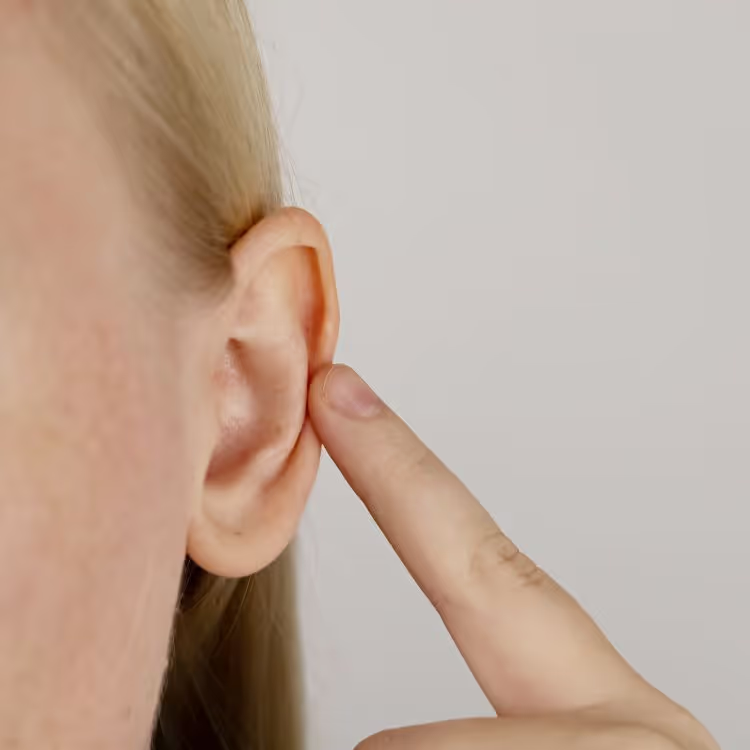
Conductive Hearing Loss
Relates to structural variances in the outer and middle ear that prevent sound from reaching the inner ear properly. This type is often medically or surgically treatable.
- Congenital malformation
- Impacted earwax
- Eardrum perforation
- Allergies
- Ear infections
- Benign tumors
- Otosclerosis
- Middle ear fluid
- Head trauma
Sensorineural Hearing Loss
Relates to inner ear problems and accounts for the vast majority of adult hearing loss. Damage to the delicate hair cells of the cochlea or the auditory nerve is typically permanent.
- Loud noise exposure
- Genetic inheritance
- Age-related decline
- Inner ear damage
- Meniere's Disease
- Otosclerosis
- Head trauma


Mixed Hearing Loss
A combination of both conductive and sensorineural hearing loss, meaning there are problems in the outer or middle ear as well as in the inner ear or auditory nerve.
Common Signs of
Hearing Loss
Hearing loss often develops gradually. These are signs that it may be time to schedule an evaluation.
Turning Up the Volume
Others comment that your TV or music is too loud, even when it sounds perfectly normal to you.
Frequently Asking "What?"
You often ask people to repeat themselves, especially in group settings or noisy environments.
Struggling in Noisy Places
Restaurants, parties, and busy offices make it especially hard to follow conversations.
Difficulty on the Phone
Phone conversations are harder to understand than face-to-face ones where visual cues help.
Avoiding Social Situations
You find yourself pulling back from conversations or events because they feel exhausting.
Ringing in Your Ears
Persistent ringing, buzzing, or humming — known as tinnitus — can indicate underlying hearing damage.
Frequently Asked Questions
The most reliable way is a comprehensive hearing evaluation performed by a licensed audiologist. If you notice any of the signs above, scheduling an evaluation is the best first step.
It depends on the type. Conductive hearing loss is often treatable with medication or surgery. Sensorineural hearing loss is typically permanent, but hearing aids and cochlear implants can significantly improve your hearing ability.
We recommend a baseline hearing test for adults around age 50, and annual tests after 60. However, if you're exposed to loud noise regularly or notice changes in your hearing at any age, don't wait.
Hearing aids don't restore hearing to "normal," but today's technology can dramatically improve speech clarity, reduce listening fatigue, and help you engage more fully in everyday life.
Many insurance plans cover diagnostic hearing evaluations. Our patient care coordinators can help verify your benefits before your appointment so you know exactly what to expect.
A comprehensive evaluation includes a review of your hearing history, a visual ear exam, a series of painless sound-based tests in a quiet booth, and a detailed discussion of results and recommendations.
Get in Touch with Us
Schedule your appointment at one of our four convenient Las Vegas valley locations.
Call us at 702-605-9133 or fill out the contact form.